





Browse Our Spring Newsletter
Inclusive communities start with inclusive workplaces
Read moreSupport our work
Restoring Relationships, Reducing Recidivism: The Impact of Fathers Inside
Amongst connotations that come to mind when we think of a man in prison, ‘Father’ is unlikely to feature. However, 54% of people in prison in the UK are parents. Combining incarceration, which causes isolation and stigma, with disproportionately high rates of adverse childhood experiences (ACEs), inevitably impacts the mental health and capacity of men in prison and therefore presents them with multiple barriers to family contact.
There exists a long-established understanding of the impact of loss of contact between men in prison and their children, with plenty of data to provide clarity about outcomes; fathers feel a sense of loss, disempowerment and an effect on identity perception. Children are sadly evidenced to experience mental health issues, anxiety, and behavioural problems which often carry into adulthood.
For children, the significance of a primary caregiver and the income they provide, suddenly being removed, causes emotional and developmental trauma that is imperative to address. Whilst state and community support is vital, it cannot replace the relationship a child has with their parent. Programmes and initiatives that support parents in maintaining family contact whilst serving their custodial sentences address this crucial restorative process.
Specifically, the unique role of a father enables children to develop coping skills, emotionally regulate, and engage socially (including with education systems), Rolle et al found in their 2019 systematic review that father engagement fosters exploration, resilience and cognitive growth.
Understandably, in light of this evident value, the temptation here is to start at the end, community-focused approaches with children as the primary focus, but for parents who have missed the vital safety and support in their own formative years, that would have enabled them to possess a clear sense of self-perception, foundational work on their own identity must be the starting point.
The multifaceted challenges and opportunities to support men in prison in addressing barriers to connection are complex, but the possibilities are realised through the empowerment of the individual and their enablement to connect well with themselves and others, according to SIG’s Theory of Change: Identity, Relationship and Community.
This is a pathway to change that begins by working with people in a manner that enables them to understand and value their personal and cultural identities, with the purpose of enabling increased self-esteem and values-based living.
Values-based living engenders a strong lens through which individuals can choose why and how they connect with people, developing bonds and trust that create relationships. These relationships can drive confidence and a desire to connect socially, creating a community that protects and nurtures self and family.
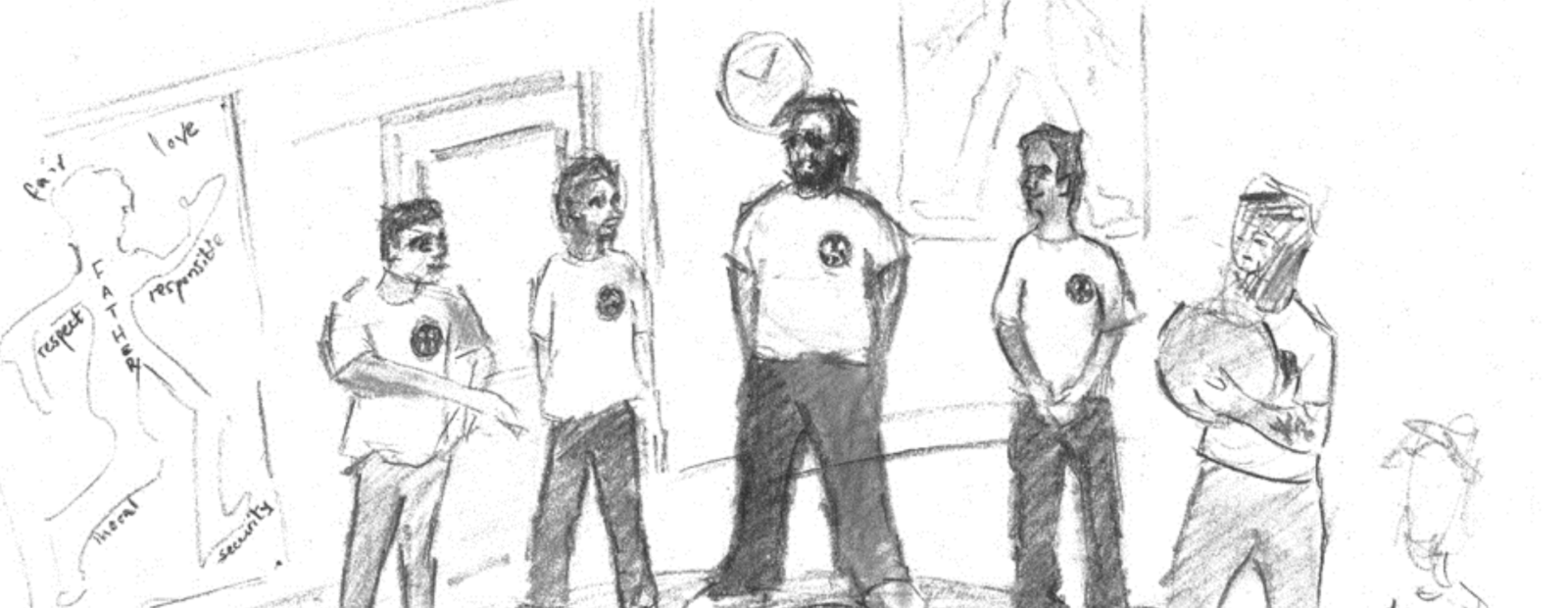
This values-based and purpose-driven model has proven helpful and empowering for fathers who are in prison. SIG’s Father’s Inside programme, delivered by SIG Safe Ground, applies arts-based therapies and in-person workshops for applying the Theory of Change as an enabling and rehabilitating tool. The most recent evaluation of Fathers Inside (Blagden 2019) highlighted a statistically significant reduction in parental stress pre /post- programme and a significant increase in less restrictive attitudes towards parenting because of the programme.
With Dr Bessel Van der Kolk’s now cult book ‘The Body Keeps the Score,’ popularising the scientific evidence around arts-based therapies and rehabilitation, public stigma still surrounds its use within the criminal justice system, which retains primarily punitive approaches to rehabilitation.
Surely, with prison places quite literally maxed out, we need investment into the identity-based programmes that support people to make best interest decisions for themselves and their families, instead of demanding change from people under the guise of social norms and functions that those in prison have often never experienced or benefited from.
A Ministry of Justice analysis of SIG Safe Ground’s programme, Fathers Inside, also demonstrated that programme participants had a lower reoffending rate compared to their counterparts who did not participate. 76.5% of participants engaged in further education, training and employment (ETE) one month after completing Fathers Inside, compared to 53.6% before the programme.
What does the data from Fathers Inside show us? That relationship and citizenship are indeed good outcomes, but they require an individual’s sense of identity and positive self-esteem to become attainable and sustainable for people in prison. In his influential review linking family ties and reduced recidivism (2017), Lord Farmer stated:
‘I do want to hammer home a very simple principle of reform that needs to be a golden thread running through the prison system and the agencies that surround it. That principle is that relationships are fundamentally important if people are to change’.
This change is needed for those in contact with the criminal justice system, their families, and the communities in which they live. Embedding rehabilitative programs, facilitating family contact through trained staff and appropriate prison facilities (technological and environmental) must become the norm in each prison so that men leave prison and stay out.
The preventive impact on families and, in particular, children, ought to be a national policy focus. Lord Farmer’s review recommended that a family strategy be mandated in every prison, which would be an essential key to unlocking the prison crisis.

Raje Ballagan-Evans
Policy and Impact Manager